
Winding Along the Tagus: A Tour Between Two Riverbanks - A motorcycle journey organized and lived with 2Ride Portugal, in the person of Sérgio Lopes - Chapter 4 of 5
Four Bridges Between Us and Lisbon
Past Santarém, the Tagus opens up into rice-colored plains — the Lezíria do Tejo — and still holds four more crossings before delivering us back to Lisbon: a modern bridge with a curious secret, a lunch stop in Cartaxo, a bridge designed by the same engineer behind the Eiffel Tower, and a wide bridge draped in carpets of green and yellow.
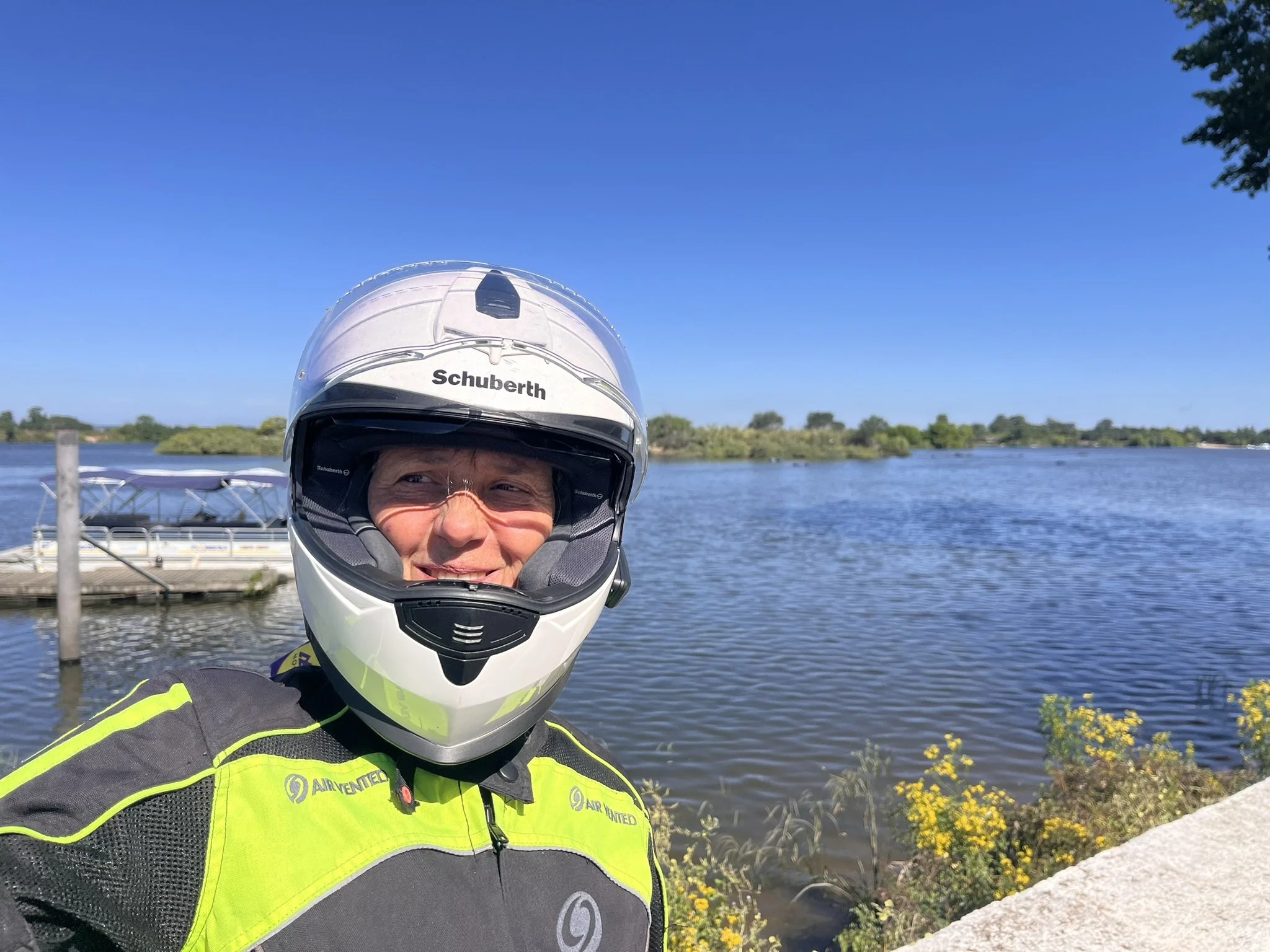
Selfie time by Escaroupim and birds island at the backdrop
The Bridge That Chose to Stay in the Dark
The word "lezíria" means flood-prone lowland, and it's exactly in that green, fertile expanse that the road delivered us to the Salgueiro Maia Bridge. Located near the Santarém valley, just downstream from the city, on the IC10 motorway, it measures 4.3 km in total length, bridge and viaduct combined. Its name honors the Captain of April, a central figure of the April 25th, 1974 Revolution, and the bridge opened on June 11, 2000. After so many 19th-century iron and timber bridges, the contrast is striking: here it's all speed, concrete, and multiple lanes setting the pace. And there's a detail I always love sharing: this bridge has never had lighting, because the light would interfere with a nearby airfield.
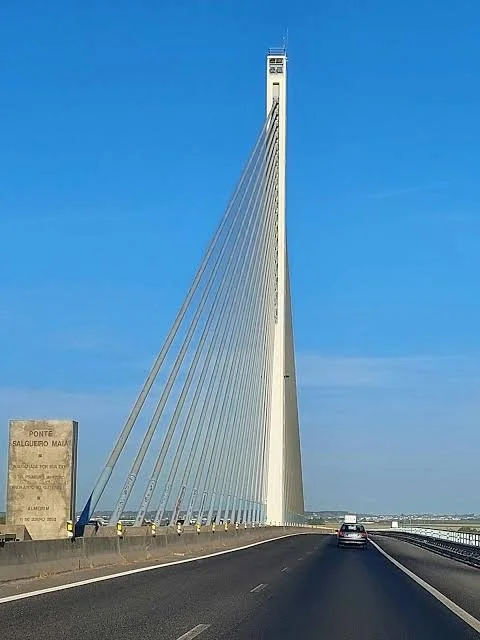
Salgueiro Maia Bridge, Santarém (2000)
A Farm-to-Table Pause in Cartaxo
We stopped for lunch at ODE Winery, in Cartaxo — a place that applies techniques from all over the world to local produce, including ingredients grown and developed on the estate's own Ode Farm, in a genuine farm-to-table experience. Built around a concept of sharing that encourages socializing and celebrating every moment, the menu is constantly evolving, always aiming to combine the best of international know-how with local produce. That day, an Asian-inspired menu paired Ribatejo ingredients with the precision of Asian cuisine, in perfect harmony with the estate's own wines — proof that such different culinary traditions, local produce, and Portuguese wine can live together in perfect symbiosis.

Fusion moment at our meal and winery ODE (Cartaxo)
Eiffel's Signature, Hidden in Muge
After lunch, the road took us to Muge, where another crossing steeped in history was waiting: the Rainha D. Amélia Bridge, a former railway bridge opened on January 14, 1904 — and a detail I always love to share, the fact that it was designed by Gustave Eiffel, the same engineer behind the tower in Paris. After a new railway bridge was built in the 1980s, this one was converted in 2001 for car and pedestrian traffic, connecting Muge, in the municipality of Salvaterra de Magos, to Porto de Muge, in the municipality of Cartaxo, and to the village of Valada, which used to be frequently cut off during flood periods before this link existed. Crossing it means feeling the contrast between 19th-century industrial precision and the rural calm that surrounds it today — almost a well-kept secret of the Ribatejo.
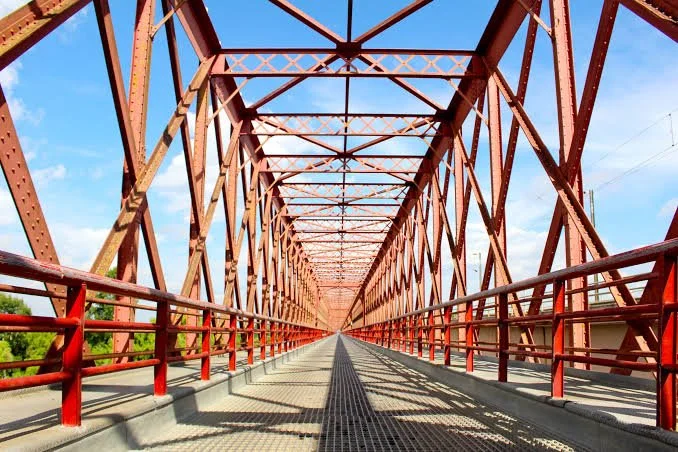
Rainha Dona Amélia bridge, Muge (1904)
Green and Yellow Carpets Before the End
This part of Portugal has some agriculture, but also a strong bullfighting tradition, with many estates devoted to raising bulls and horses, and a distinctive landscape of plains in a mix of colors. Here you'll also find the Ponte das Lezírias, stretching 12 km, along which we watched the river grow noticeably wider, wrapped in carpets of green and yellow. Only one final stretch remained now — and one last bridge before meeting Lisbon again.
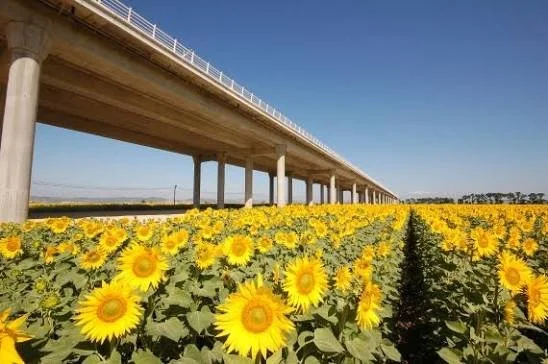
Lezirias Brigde (Carregado)
