
Winding Along the Tagus: A Tour Between Two Riverbanks - A motorcycle journey organized and lived with 2Ride Portugal, in the person of Sérgio Lopes - Chapter 2 of 5 — Where the Border Dissolves
The Day We Crossed a River and a Country
In the previous chapter, we left Marvão bound for Spain, after a night spent falling asleep to Saramago's words. This second day is, without a doubt, the most intense of the whole trip: we cross into another country and back over a dam, ride through gorges carved into the rock, cross paths with vultures in mid-flight, and still find time to hug a tree that's over three thousand years old. By the end of the day, we'll have crossed the Tagus five more times.
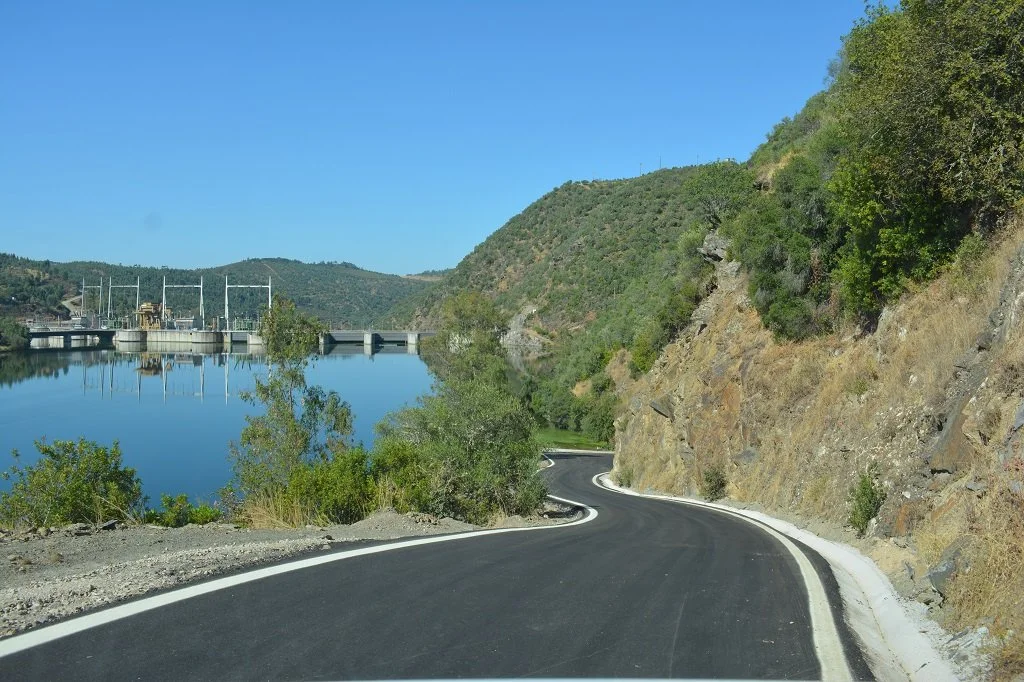
Cedillo Dam
Where the Border Simply Disappears
Early in the morning, after a delicious breakfast made with local produce, we set off, crossing the border into Spain. We started the route at the Cedillo Dam, which marks the point where the Tagus enters Portuguese territory — a dam linking two riverbanks, one Portuguese, one Spanish, that can only be crossed on weekends. There's something almost mystical about it: crossing it means feeling, for a few moments, the border between the two countries completely dissolve.
The road winding down toward the river was full of curves, with moments of real adrenaline on the faster bends and moments of calm on the wide, slow ones. The landscape changed noticeably — from flat stretches to more rugged terrain, with a different color palette, greener, calmer. We reached Vila Velha de Ródão, where one of the most breathtaking natural landmarks of the whole journey was waiting for us: Portas de Ródão, a gorge the river itself carved into the rock, creating a dramatic narrowing in its course. Crossing the Vila Velha de Ródão bridge, opened in 1888, its 167-meter iron deck resting on two granite pillars, feels like crossing straight through the region's history.
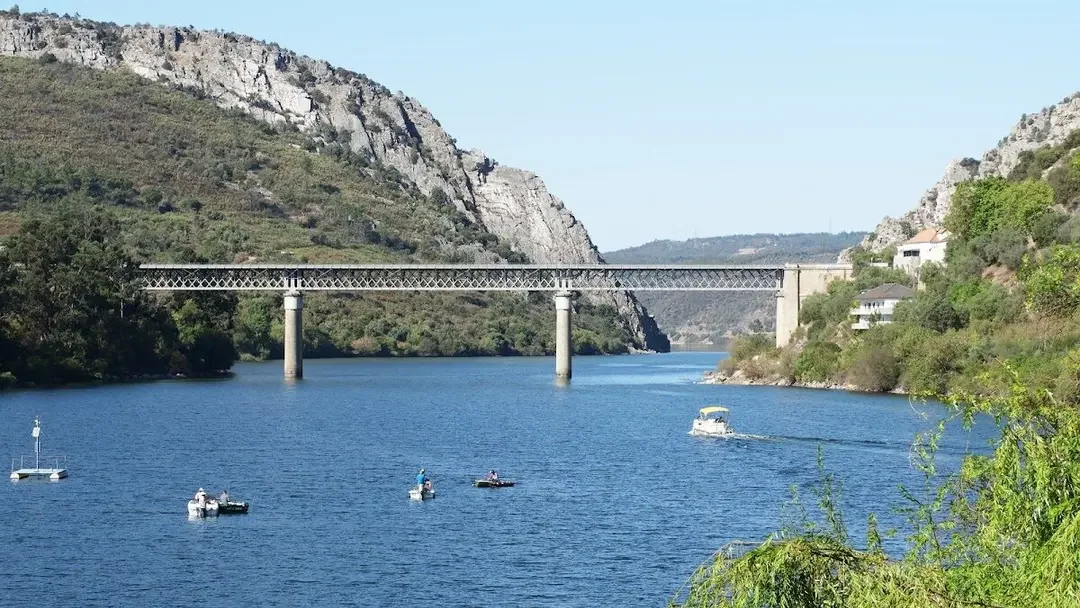
Ponte de Portas de Rodão (1888), Vila Velha de Rodão
Vultures in the Sky, Legends in the Stone
Past the bridge, the road invited quiet contemplation, and it was a pleasure to stop and feel the wind change temperature — drier and warmer near the cliffs, more humid closer to the water. We followed a winding road along the river, with views over the cliffs on the far bank, all the way to Castelo do Rei Wamba, tied to a legend about a Visigothic king. But what really took my breath away was the view from the lookout over the Tagus, where you can spot vultures gliding and the full sheer cliff face of the opposite bank. I'm a sucker for legends, and places like this always carry me off into a bigger journey of my own, imagining characters and love stories I'll never actually know.
We carried on through a more rural landscape, past cork oak groves, olive fields, and small scattered villages, the scent of rockrose and rosemary drifting in through my open visor. Shortly after, one of the day's high points: the Pracana Meanders viewpoint, from where you can see the river and dam's near-perfect bends — a scene that looks painted, easy to get lost in until you forget what time it is.
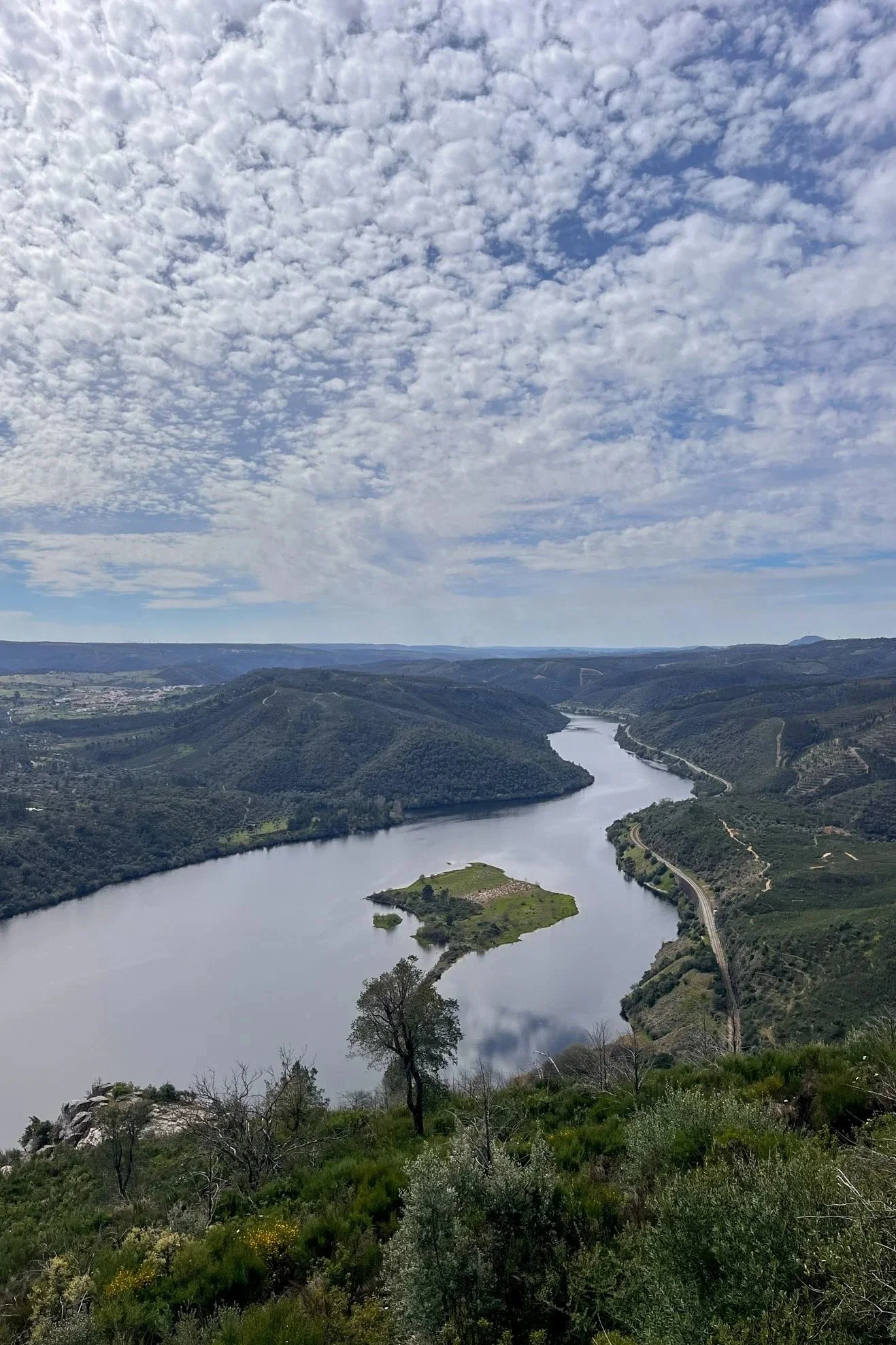
Rei Wamba Castle viewpoint
The Tree That Watched Three Thousand Years Go By
We moved on to another crossing, at the Fratel Dam, 43 meters high, completed in 1973 — a landscape of simplicity and stillness that left my whole body relaxed. Further along, the Barca da Amieira boardwalk revealed the Tagus at its most bucolic, the silence broken only by the sound of the bikes' engines. The landscape then opened up around Belver Castle, perched on its hilltop, and the 1907 bridge, with 239 meters of iron deck, followed by a roughly 3 km wooden boardwalk leading to Alamal River Beach. We still stopped at Ortiga River Beach, feet on the fine sand, cool water lapping at our toes, listening to the river run slow, as if in no hurry at all to reach the sea.
We continued on to another crossing — the Belver Dam, 30 meters high, completed in 1952, crossed over a perforated metal walkway that lets you see the river running beneath your feet — and then to the Mouriscas Bridge, a combined road and rail structure built in 1992, where the Tagus runs slow and wide, the late afternoon light casting silver reflections suspended in the air.
But the most moving moment of the day was a small detour off the route, to see an olive tree. Said like that, it sounds like an odd thing to do, but when I got there, I was genuinely moved. I'm talking about the Mouchão Olive Tree, a majestic tree that's 3,350 years old, the oldest in Portugal. This ancient tree has surely witnessed countless moments of our country's history. I couldn't resist going to hug it — not all the way around, mind you, its trunk measures roughly 11 meters.
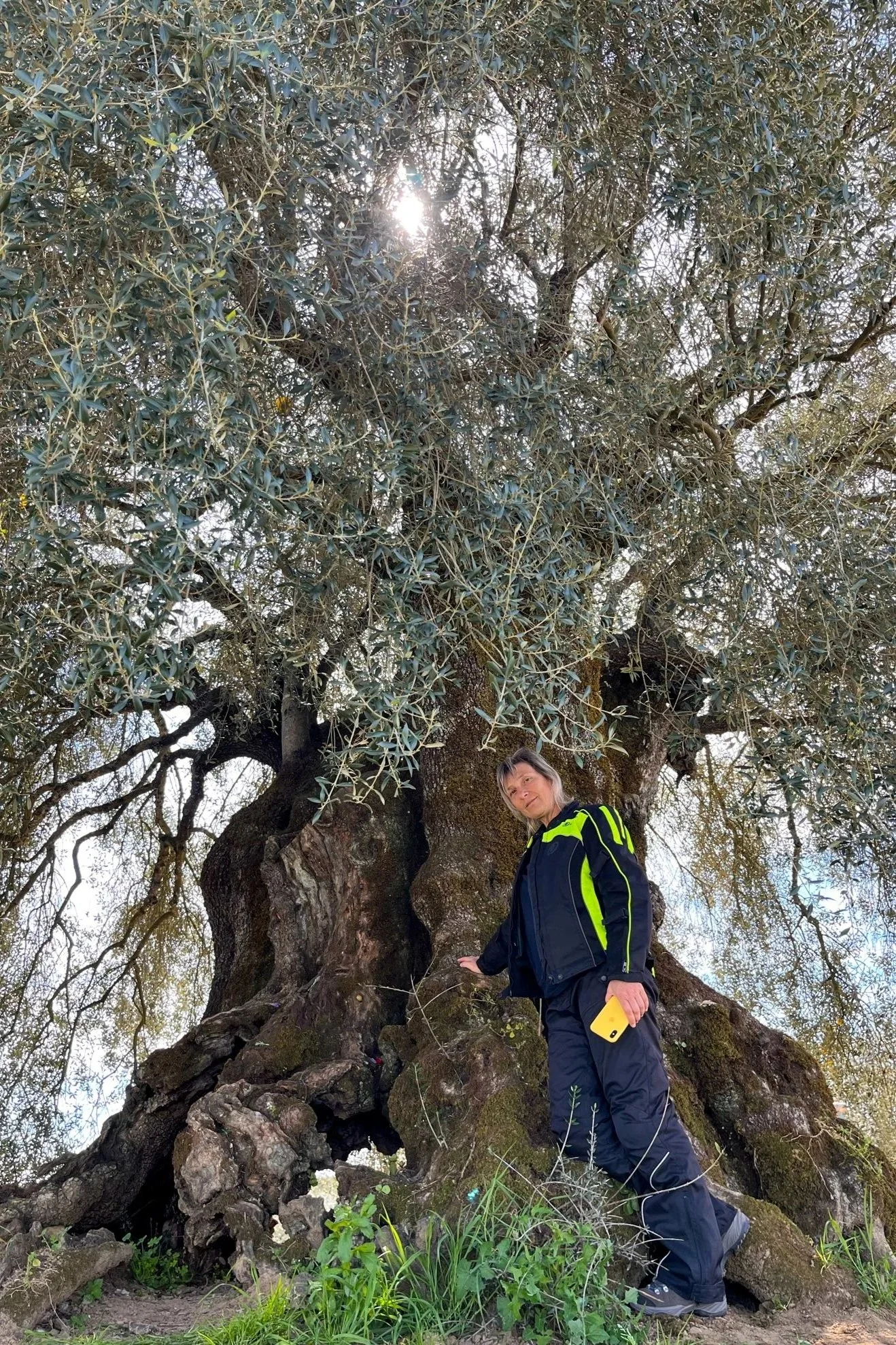
Mouchão olive tree
Abrantes: The River Still Wasn't Done
Back on the road, we headed toward Abrantes, the Tagus at our side the whole way, impossible not to admire the serenity with which it flows toward the sea. Abrantes Castle is beautifully kept and was once part of the Tagus defense line during the Christian reconquest of the Iberian Peninsula. We stopped for dinner at Restaurante Santa Isabel, so authentically local that the hardest decision of the night was picking one dish from a menu where everything looked good — and the rest was pure pleasure for all five senses. We spent the night at Luna Hotel Turismo, with a lovely view of our traveling companion, the Tagus.
Five crossings in a single day felt like the peak of the trip. But the river still had more bridges waiting for the days ahead — some over a century old, others so modern they don't even have lights at night.
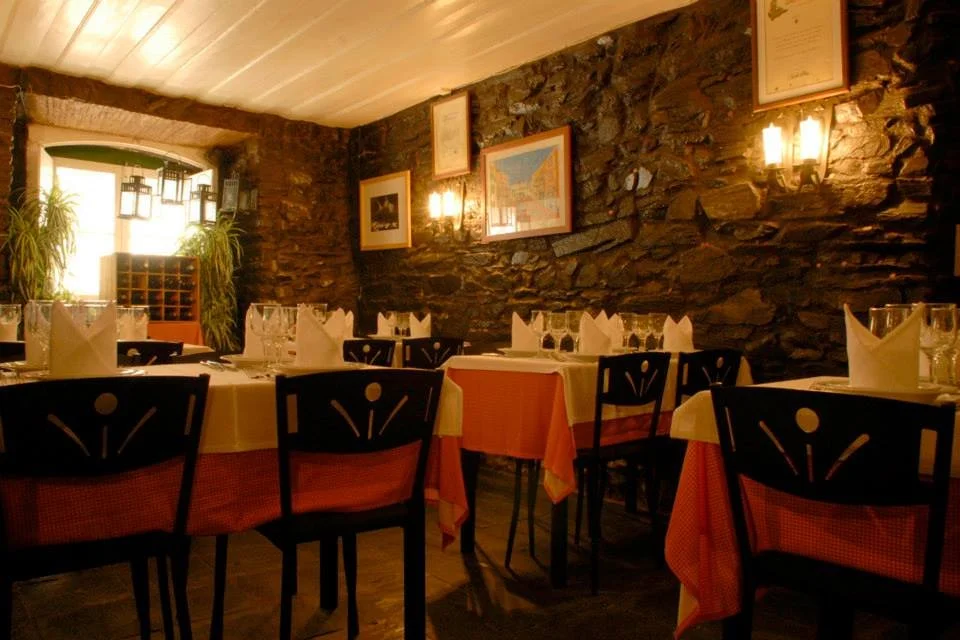
Santa Isabel restaurant, Abrantes
